
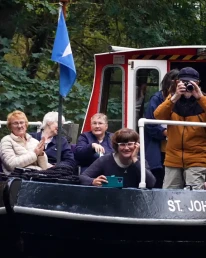
We were joined by Professor Alan Gow from Heriot-Watt University who challenged traditional, the usual negative thinking about ageing brains. He reminded us that headline writers often search for a single “magic ingredient” for brain health, whereas in reality it’s a combination of lifestyle factors and there are things that we can do to help our brains stay happy and healthy.
Professor Gow explained our different mental skills change in different ways as we grow older Our fast thinking skills, key to making sense of the world when we have less experience and knowledge to draw on, slow down with age. For example, processing, reaction times and dealing with new problems. But our knowledge-based skills are based on what we learn over a life time, the facts we know, our vocabulary, attention, and focus. These stay strong or can even get better as we get older.
This set us up for our “Happy Brains Playshops,” based on things that are good for brains – planning a community garden, playing with colour, organising a community dance event and looking at health food and staying connected. We also had a workshop to design a Healthy Happy Brain.
We compared notes and views on what we think about brain health and what should happen next. The main messages were:
- There are lots of fun and meaningful ways we can help our brains that make life better
- There are many different ways of being social and lots of possibilities that excite us
- Quality meaningful connections are really important for our brains and help us respect and care for each other, they make us all feel good
- It’s not always easy to do what is good for us – to have the confidence or means to go out or the ability to make changes. It can be hard to make ourselves take that first step
- Play is really important – being creative, experiment and learn, it’s a human right
- We’re still the same inside but our choices and preferences can change – some people want to go clubbing in the afternoon!
The Gathering agreed that DFEL should continue to promote healthy well nourished neurones. As a result we:
- Ran a weekly pop in Happy Healthy Brains Hub at The Hollies for 6 months to take the conversation further
- Support a Community Dance project proposed by Victoria at Queen Margaret University
- Support a Community Garden in Musselburgh suggested by Kate
You can read about these projects and what happened next here…
Related Posts

Dementia Friendly Haddington: A Potted History
For many years, the Haddington and Lammermuir community has been actively engaged in exploring what it means to support people affected by dementia s a community.
Musselburgh Library Garden
The Musselburgh Library Garden is a community garden, a place for plants and people to thrive, a place for connection, joy, and confidence. The Library Garden was created by people working together…