
Growing a garden and a community
Kate Allan had an idea for a community garden in Musselburgh and started sharing it in conversations with people. She found others who were inspired by her vision.
Ideas moved into action when Kate connected with Wilma at Musselburgh Library and Gaynor from Musselburgh Area Partnership. Wilma wanted to develop the unused garden behind the library and Gaynor could see the value for the community. Sue from Dementia Friendly East Lothian joined in too, seeing the potential links with the Musselburgh Meeting Centre.
Kate, who created the garden, explains:
“Wilma, who’s the library manager here, talked about wanting to develop the garden. At that meeting, it happened that people with dementia themselves were saying they wanted to have more time outdoors, more contact with nature, and I visited the space with somebody from the Scottish Wildlife Trust, and we discovered this amazing space… which had enormous potential. It was clear immediately that we could do a lot. It could be great.”
The Library Garden project got underway. For DFEL, we were delighted that Meeting Centre Members were involved from the start, sharing their ideas, experience, skills and enthusiasm and working alongside Kate to help shape the garden. Kate said:
“Sometimes it might be about sharing their expertise, their ideas, quite a few people in the meeting centre have got quite a background in gardening, and they can talk about, you know, what they’ve done and what they’ve liked doing, and that’s a huge source of, you know, inspiration and information and guidance, which is really good, too.”
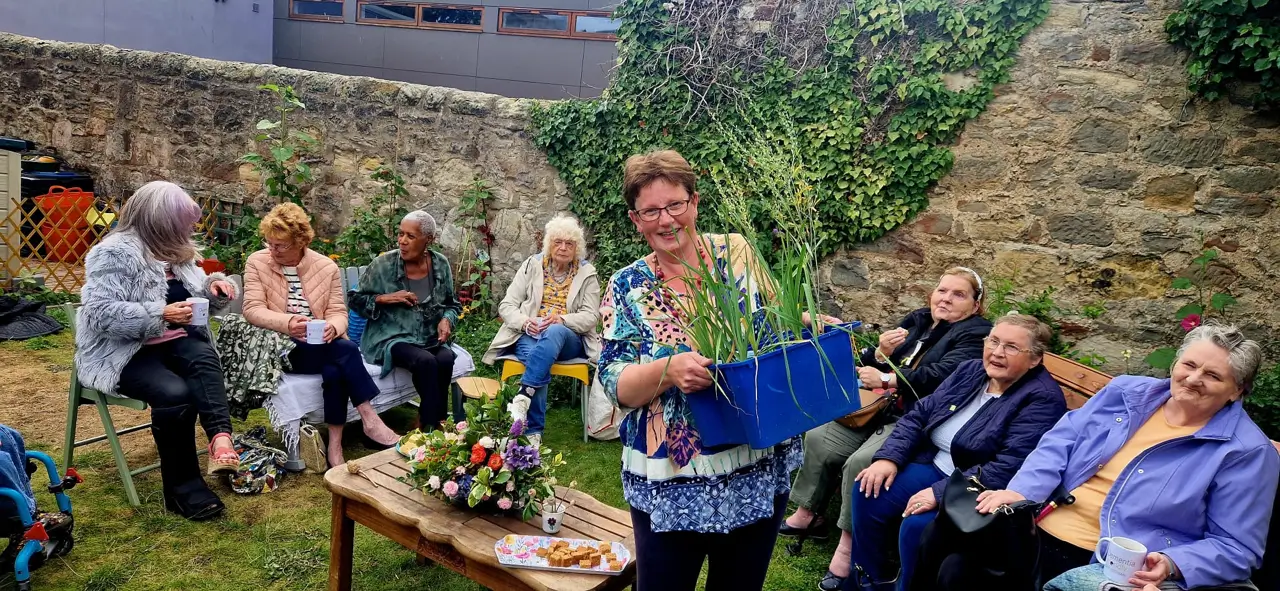
Everyone had something to bring: gifts of the head, heart and hands. Knowledge, memories and ideas; practical skills and experience; enthusiasm, friendship and curiosity. For Members, it was an opportunity to spend more time outside, try something different, learn from one another and discover new interests.
The Library Garden quickly became a place for people of all ages. Members invited their friends from Musselburgh Grammar School to join them in the garden, and there is now a Garden Club for children and opportunities for intergenerational projects.
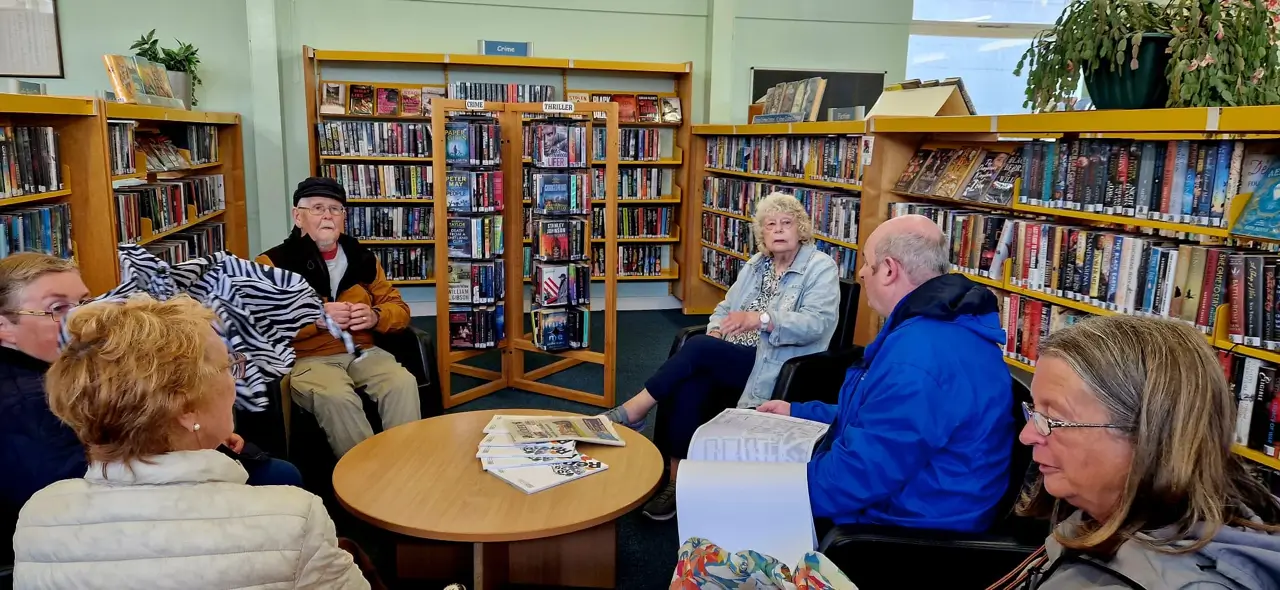
The Library is already a hub for the community, with lots of people coming in and out regularly. As Kate explains:
“…there are lots of people coming in out of the library. There are loads of groups that meet at the library, we’re trying to get people who are using the library regularly to come out and chat about things and have a look. And so that kind of ideal of it being a way of connecting.”
People pop into the garden for a chat, to see what’s happening or simply to spend some time in nature. School visits have led to a junior gardening club and the garden has hosted community events and outdoor reading, as well as growing fruit and vegetables.
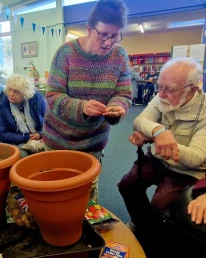
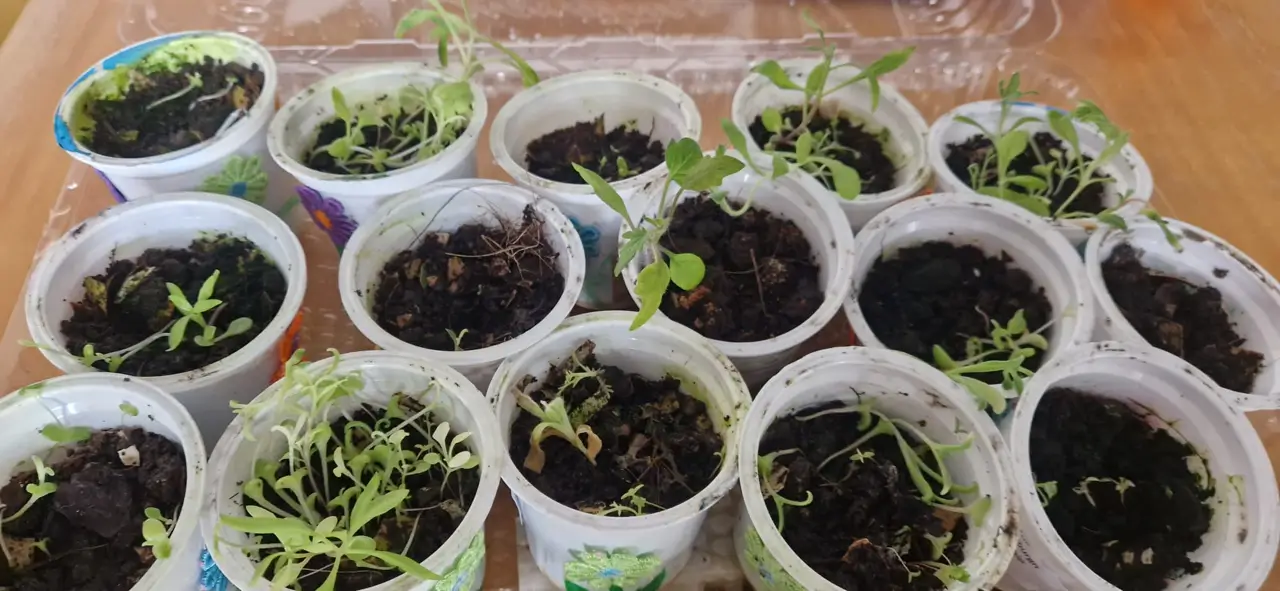
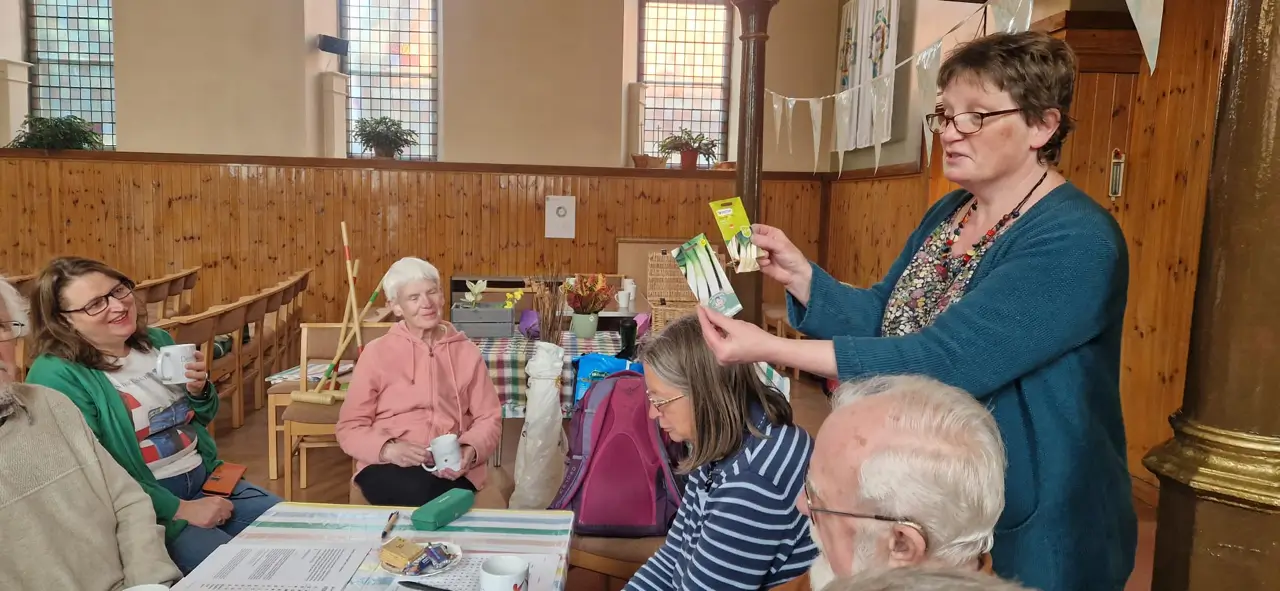
And when Members can’t get to the garden, the garden can come to the Meeting Centre. From the start, Kate and the Meeting Centre team have found different ways for Members to be involved, from planting seeds and bulbs ready to plant out in spring to sharing stories and memories sparked by photographs.
Musselburgh’s own growing heritage is part of the story too. Musselburgh leek seeds have been planted by Members, adding another connection between the garden, the town and people’s memories. And Members are looking forward to adding Musselburgh leeks to their own potato crop in a delicious soup!
A place for people to thrive
Being involved with the Musselburgh Library Garden project has been a special experience for Musselburgh Meeting Centre Members, the team and our friends at Musselburgh Grammar School.
From the beginning, Kate visited the Meeting Centre to talk with Members about the project. Gardening was a great conversation starter, opening up stories about childhood, work, family, farming and growing things. Some people had grown up with gardening and had years of knowledge and skills to draw on. For others, it was something new to explore. Kate described their input as members tell the story best:
“It keeps our brain active. That’s the main thing.”
“It’s done me a power of good.”
“I really enjoyed the day.”
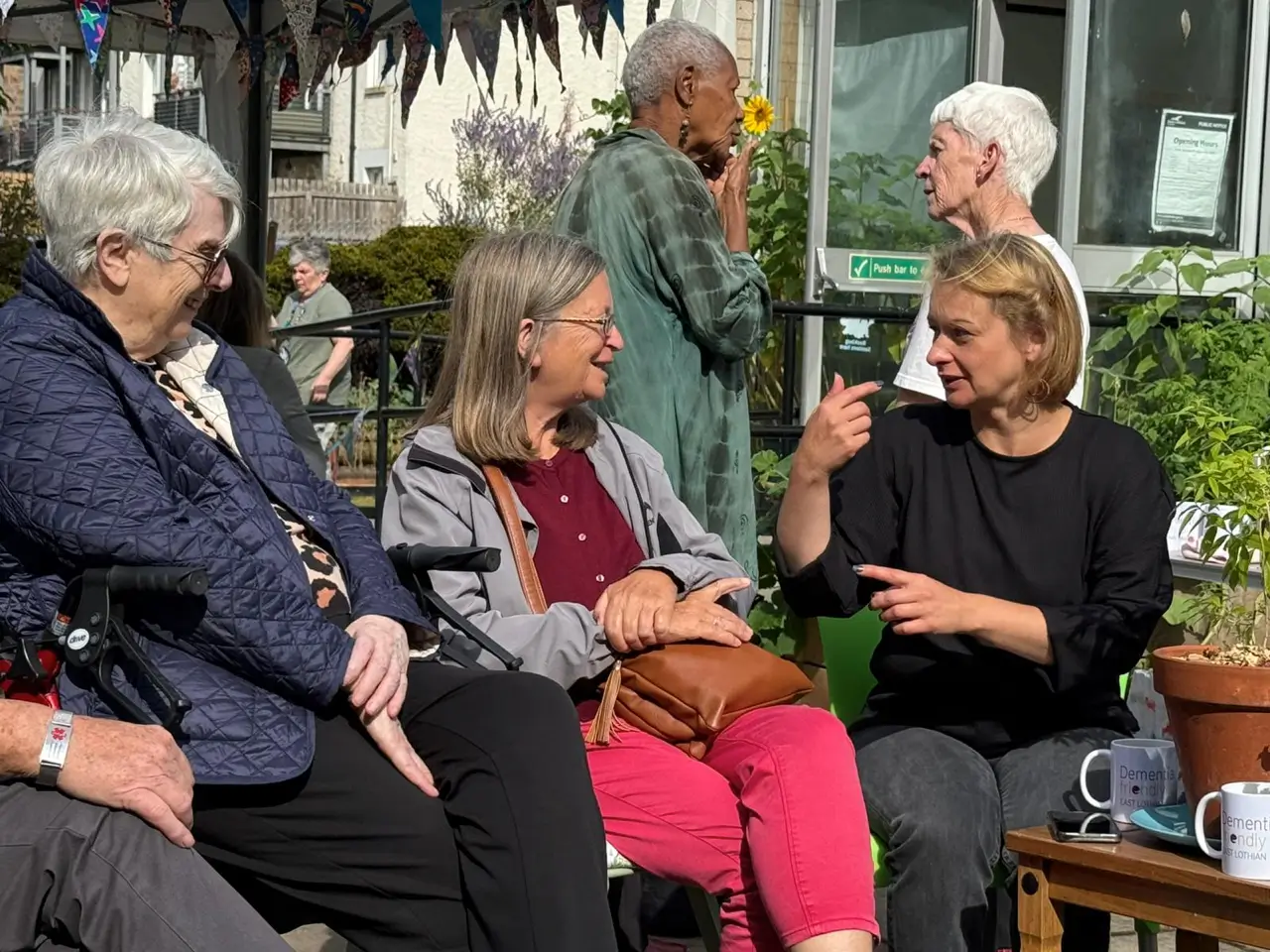
“The garden gives us a place to meet, chat and belong.”
The garden also connects people to their own life stories, identities and experience:
“My Dad was a gardener… he taught us what to do… so, come on, let’s go.”
There is pride in helping to create something new:
“This is a new thing that started there now, but they had one going last year, at the library, you know, and she says, ‘I’m needing some people who give us a hand,’ I said, ‘Well, come on’.”
There is also a boost round trying something different and discovering new possibilities:
“I think I might be good at it.”
And the freedom to be yourself, with others:
“I was somewhat reluctant to come. I thought it was gonna be really weird. I thought we would be, sort of, marshalled, if you know what I mean… but in fact, you were encouraged to be yourself… And I think it’s done me a power of good.”
“…you don’t have to explain yourself, because they’re on the same boat, so that’s another good thing.”
Sometimes the simplest response says it all:
“It’s brilliant.”
The younger gardeners have also experienced that initial nervousness about trying something new:
“The first week I came, we were doing planting, and I was a bit nervous, like, obviously, to come down, like wasn’t too sure, kind of what it was gonna be like, but it was really nice actually. It was just a bit of fun. We were out in the front, just planting things, getting our hands dirty, and it was really nice actually.”
And they have found something valuable in simply getting away from the usual routine, spending time together and being outside:
“As [name] explained, it is a nice place to go to every 2 weeks, to have, like, a sort of detox and, you know, chill out, talk to people, play games… even going out to the garden as well, to water plants and clean up as well.”
There is a huge body of evidence about gardens, green space, nature, brain health and wellbeing, including their importance for people living with dementia. That’s a bigger story and one we’ll come back to. Here we can see some of it happening in people’s everyday lives.
And, of course, it’s a good place for nature too. As Kate says:
“It’s not just people who visit us here. Mother Nature likes to come along, too. She brings sparrows, blackbirds and pigeons, goldfinches to name but a few. It’s not just adults who visit and work here. There’s a children’s gardening club too.”
Being Boundary Free
The garden has brought together Meeting Centre Members, children and young people, library users, volunteers, community organisations and people simply passing through. People can work, play, learn, chat, share what they know or just enjoy the space.
And stories about the Musselburgh Library Community Garden has travelled much further too. The East Lothian Courier reported that Musselburgh Library was selected by the European Cultural Foundation’s Buddies project as a standout example of community-led learning. It was the only Scottish library selected, one of four in the UK and one of 41 across Europe.
Wonderful recognition for something that started with an idea, conversations and people seeing possibilities together.
Growing hope and friendship
Kate remembers the first day the Meeting Centre Members went to the Community Garden:
“The first session where people came along was in November last year [2025], and over in that bed there [points], which is at the sort of edge of the woodland area, it was quite a cold day, it was beginning to be quite dreich, but we planted loads of bulbs, and that was a lovely, sort of hopeful thing, and then people who came along this week were able to see the tulips and the daffodils had just gone over, but we had loads of daffodils before that, crocuses, et cetera. So that was a really nice hands-on session of people actually in the garden planting things.”
And Kate’s reflection on that day captures something bigger:
“When we planted those bulbs, it was cold, it was a bit damp. It was an act of hope and faith in the future.”
Not only the bulbs flourished. People and connections have flourished too.
In many ways, it’s very simple: people being together in nature, connected to each other and their community. As Kate puts it:
“You’re doing your thing, I’m doing my thing. Even if it’s just, like, a companionable kind of silence.”
The Musselburgh Library Garden is somewhere to grow things, meet people, remember, learn, share what you know, try something new, contribute, connect with nature, or simply sit for a while.
When somebody told Kate they didn’t have a garden of their own, her answer captured the heart and soul of the Musselburgh Library Community Garden:
“This is your garden.”
Related Posts
Welcome to the Musselburgh Meeting Centre Workshop!
Members of the Musselburgh Meeting Centre invited a range of people from across the community to find out more about the Meeting Centre and experience what it’s like to come to the Centre and to…
Colourful Connections in East Linton: Exploring the Meeting Centre Approach in the Community
For four Tuesday mornings, 14 people from across the East Linton area got together to build Colourful Connections, a dementia-inclusive space in the community for a new creative arts project focused…

Dementia Friendly Haddington: A Potted History
For many years, the Haddington and Lammermuir community has been actively engaged in exploring what it means to support people affected by dementia s a community.