
If someone had told you a few years ago that a simple blood test could help identify the biological signs of Alzheimer’s disease, it might have sounded like science fiction.
For years, diagnosing Alzheimer’s has relied on a combination of clinical assessment, memory and thinking tests and brain imaging. Gaining greater certainty about the underlying biological changes could require more specialist investigations, such as PET imaging or a lumbar puncture. These can be more invasive, expensive and resource-intensive, and access to them is limited.
Yet this past summer, a landmark study began offering Alzheimer’s blood tests through more than 50 GP practices across Scotland, looking at whether a simple blood test could help people receive answers sooner.
It’s just one sign of how quickly the science around Alzheimer’s is changing.
For much of the past 20 years, progress could feel frustratingly slow. The medicines available for Alzheimer’s could help some people manage symptoms, but they did not tackle the underlying disease itself, and they certainly didn’t even approach the idea or possibility of prevention.
Now, for the first time, we have treatments that have been shown to slow the progression of early Alzheimer’s disease. Lecanemab and donanemab target amyloid, one of the proteins that builds up in the brain in Alzheimer’s. They are not cures, and they are not currently available for routine use through NHS Scotland, but scientifically they represent an important shift: Alzheimer’s is no longer a disease whose course we can only observe. We have evidence that it can be changed.
And research is already moving further upstream.
As mentioned at the top of this, blood-based biomarkers such as pTau217 are being studied as ways of detecting the biological changes associated with Alzheimer’s more easily and much earlier. At the same time, clinical trials are now investigating whether treatment could begin before someone develops memory or thinking problems at all, with the aim of delaying, or potentially preventing, symptoms from developing.
That is a very different scientific conversation from the one we were having even a decade ago.
There is a comparison here with diseases such as HIV and diabetes. There was a time when an HIV diagnosis carried an overwhelmingly bleak prognosis. Scientific advances did not make HIV disappear, but they transformed what living with it could mean. Today, with effective treatment, many people with HIV can live long and healthy lives.
Diabetes has seen a similarly profound transformation: before the discovery of insulin, type 1 diabetes was usually fatal, whereas today advances in treatment and monitoring allow millions of people to manage it as a long-term condition and live full lives.
Alzheimer’s is not there yet. But for the first time, research is beginning to point towards a future in which an Alzheimer’s diagnosis might also mean living well with a disease that can be detected earlier, treated more effectively and, one day, perhaps prevented altogether.
Perhaps that changing landscape also means thinking differently about clinical research itself. In cancer care, we have become accustomed to clinical trials being part of the conversation following a diagnosis, with new and experimental treatments often seen as another option worth considering. Alzheimer’s research has not always been viewed in quite the same way.
Taking part in a trial can still feel unfamiliar or daunting, but as treatment options begin to change, perhaps that conversation needs to change too.
That is why research participation matters so much.
Every blood sample, memory assessment, brain scan and clinical trial visit helps researchers understand more about who develops Alzheimer’s, why it progresses differently between people, and which treatments might make a difference.
Here in Scotland, people can take part in many different kinds of brain health research, from long-term observational studies to clinical trials investigating new treatments. You do not necessarily need to have an Alzheimer’s diagnosis to ask about research, and speaking to a research team does not commit you to taking part.
As someone who works for Scottish Brain Sciences, I see this changing landscape at close quarters. We work with people at many different stages, including those who simply want to understand more about their brain health, people who have noticed changes in memory or thinking, those who already have a diagnosis of mild cognitive impairment or Alzheimer’s disease, and people who may be at increased risk because of their family history. Increasingly, clinical trials are being designed for these different groups, including studies looking at whether treatment can begin before symptoms appear at all.
For some people, taking part can also provide access to more detailed assessment and specialist clinical expertise. Our clinical team can work alongside a person’s GP to investigate changes in memory or thinking and, where appropriate, help support the process of reaching a diagnosis. For those who already have a diagnosis, research can provide ongoing monitoring, specialist input and access to studies that may be relevant to them. The aim is not to replace someone’s existing healthcare, but to work alongside it, sharing relevant information with their GP and helping to connect research, specialist assessment and ongoing support.
There is never any obligation to take part, and getting in touch simply gives someone the opportunity to ask questions, understand what research may be available and decide whether it is right for them.
After many years when the Alzheimer’s landscape seemed to change very little, there is now genuine movement. We cannot yet say that Alzheimer’s can be prevented or turned into a condition that everyone can simply live with for the rest of their lives.
But, for perhaps the first time, we can see a scientific route that might one day take us there.
If you would like to find out more for yourself, a family member or a friend, you can register your interest with Scottish Brain Sciences at brainsciences.scot/register-interest-form, email participation@brainsciences.scot or call 0131 353 0233.
Related Posts
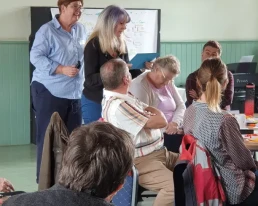
Welcome to the Musselburgh Meeting Centre Workshop!
Members of the Musselburgh Meeting Centre invited a range of people from across the community to find out more about the Meeting Centre and experience what it’s like to come to the Centre and to…
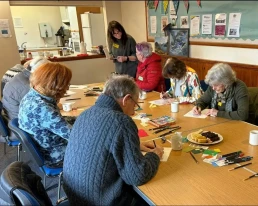
Colourful Connections in East Linton: Exploring the Meeting Centre Approach in the Community
For four Tuesday mornings, 14 people from across the East Linton area got together to build Colourful Connections, a dementia-inclusive space in the community for a new creative arts project focused…
Prevention Under Pressure: findings from a recent survey of community-led organisations delivering prevention in Scotland
Community—our connections to people and places—lies at the heart of everything we do, shaping how we build relationships, giving us sense of belonging and supporting wellbeing. Scottish Communities…